
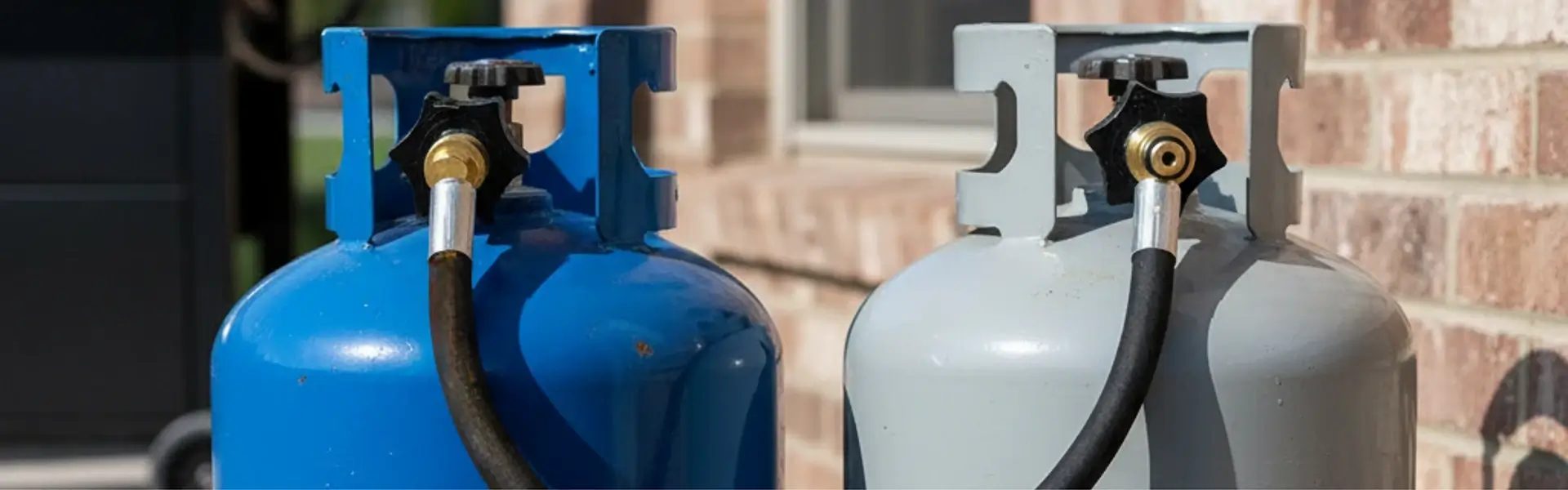
For gas installers, a job isn’t finished when you leave the site – it’s finished when you don’t have to go back.
Call-backs eat into your time, your margins, and your customers’ confidence. And often, they’re caused by small components that don’t get much attention during quoting or planning. One of those is the LPG propane bottle connector hose, also known as the pigtail hose. If that link between the bottle and the system fails, everything upstream and downstream is suddenly your problem again.
Choosing the right pigtail hose from the start is one of the simplest ways to cut down on unnecessary return visits.
Why the Bottle Connector Hose Matters So Much
In any LPG or propane installation, the pigtail hose does more than just “join things up.” It connects the gas bottle to the regulator or fixed pipework, allows for controlled movement when bottles are changed, and takes strain off rigid fittings and joints. When the wrong hose is used, the wrong material, wrong length, or wrong thread – tiny issues can creep in: slow leaks, stressed fittings, cross-threaded connections, or damaged hose from kinking and rubbing.
Those problems rarely show up on day one. They show up a few weeks or months later, in the form of a call from the customer. That’s why it pays to treat the connector hose as a critical component, not an afterthought.
A Closer Look at the G1 Tradepoint Propane Pigtail Hose
The Propane Pigtail Hose Pipe LPG Propane Bottle Connector from G1 Tradepoint has been put together with real-world LPG installations in mind.
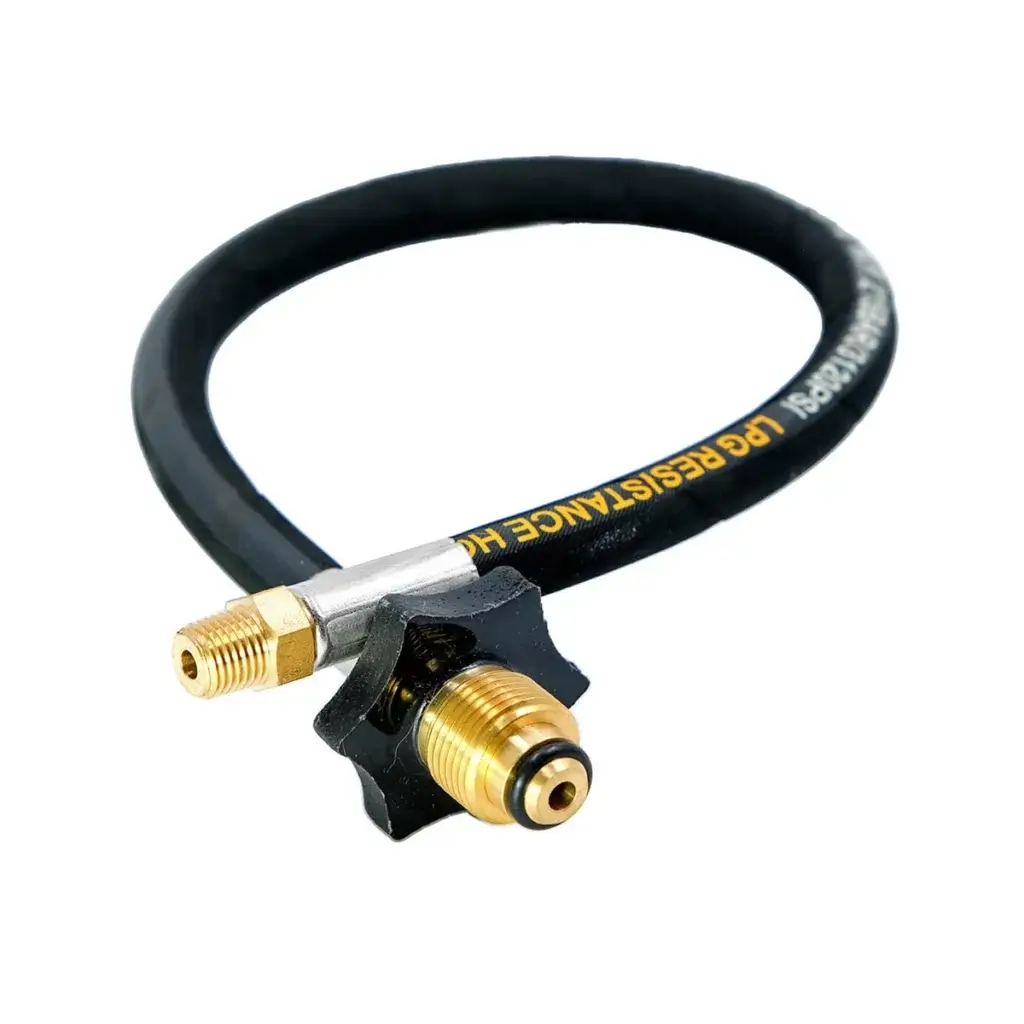
It’s part of the Gas Pipes & Accessories range and is designed specifically for LPG and propane bottle connections. The hose is manufactured from black rubber that is suitable for LPG use and our hose is the only hose in Africa that has the SGS Certificate. Giving it the flexibility needed around a cylinder while still standing up to the conditions typically found in cylinder cages, outdoor bottle stands, or small plant areas. Installers can choose between a 500 mm and a 1000 mm length, depending on how much reach they need to achieve a neat, relaxed route between bottle and system.
Pricing sits in an accessible range (R149,44 – R227,79 including VAT), and for export customers, the product is zero-rated with 0% export VAT when shipped out of South Africa. That makes it viable not only for local work, but also for cross-border installers sourcing gear through G1 Tradepoint.
Getting the Threads Right – Avoiding a Common Cause of Leaks
One of the fastest ways to invite a call-back is to pair the wrong threads or force a connection that only “almost” fits. The G1 Tradepoint pigtail hose takes that guesswork away by using appropriate gas and NTP threads from the factory.
On the cylinder side, the hose is fitted with a male 5/8″ left-hand thread. The left-hand, anti-clockwise turn is a recognised gas convention and helps distinguish it from everyday right-hand threads used elsewhere. On the outlet side, you’ll find a 1/4″ male NTP thread, ready to tie into compatible regulators, fittings, or gas pipe systems designed around that standard.
For the installer, that means fewer adaptors, fewer on-site improvisations, and far less chance of cross-threading or relying on sealing methods that were never intended for that joint. A properly matched thread set simply seals better, lasts longer, and gives you one less weak point to worry about.
How the Right Hose Reduces Call-Backs in Practice
The first way this hose helps you is through its material and construction. Because the rubber is suitable for LPG environments, it is far better equipped to handle contact with gas and the ambient conditions around gas bottles. Hoses that aren’t built for this work can harden, crack, or become brittle over time. Those changes are often invisible to the customer until a leak test or a smell gives the game away. Using a hose that’s designed to live in that environment extends working life and reduces those “we’ve got a smell of gas” calls.
Flexibility is the second advantage. A rigid connection between the bottle and the system may look tidy in photos, but in real life bottles are moved, swapped, knocked and bumped. Every bit of that movement can be transmitted straight into rigid pipe or the regulator body if there’s no flexible link. A pigtail adds that controlled flex, so when a cylinder is changed or nudged, the joint isn’t fighting against solid steel. Over time, this protects threads, regulators and pipe joints from fatigue and minor damage that later shows up as a leak.
Length choice also plays a role in reliability. With a 500 mm and a 1000 mm option, you can select a hose that reaches comfortably without being pulled tight and without leaving coils of spare hose draped where they shouldn’t be. A hose that is too short ends up under constant tension or makes you route it through sharp bends. One that is too long often kinks, rubs, or hangs in places where it can be accidentally damaged. By matching the length to the layout, you give the hose an easy life, and that usually means a longer, trouble-free life.
Finally, there’s the benefit of using a purpose-built bottle connector rather than adapting something not quite meant for the job. When a product is specifically made as an LPG propane bottle connector hose, everything from the materials to the threads and the length options are aligned to that job. That alignment reduces the temptation to “make it work” using extra fittings, temporary hoses, or questionable joints, all common sources of later problems.
Where This Hose Fits in Your Day-to-Day Work
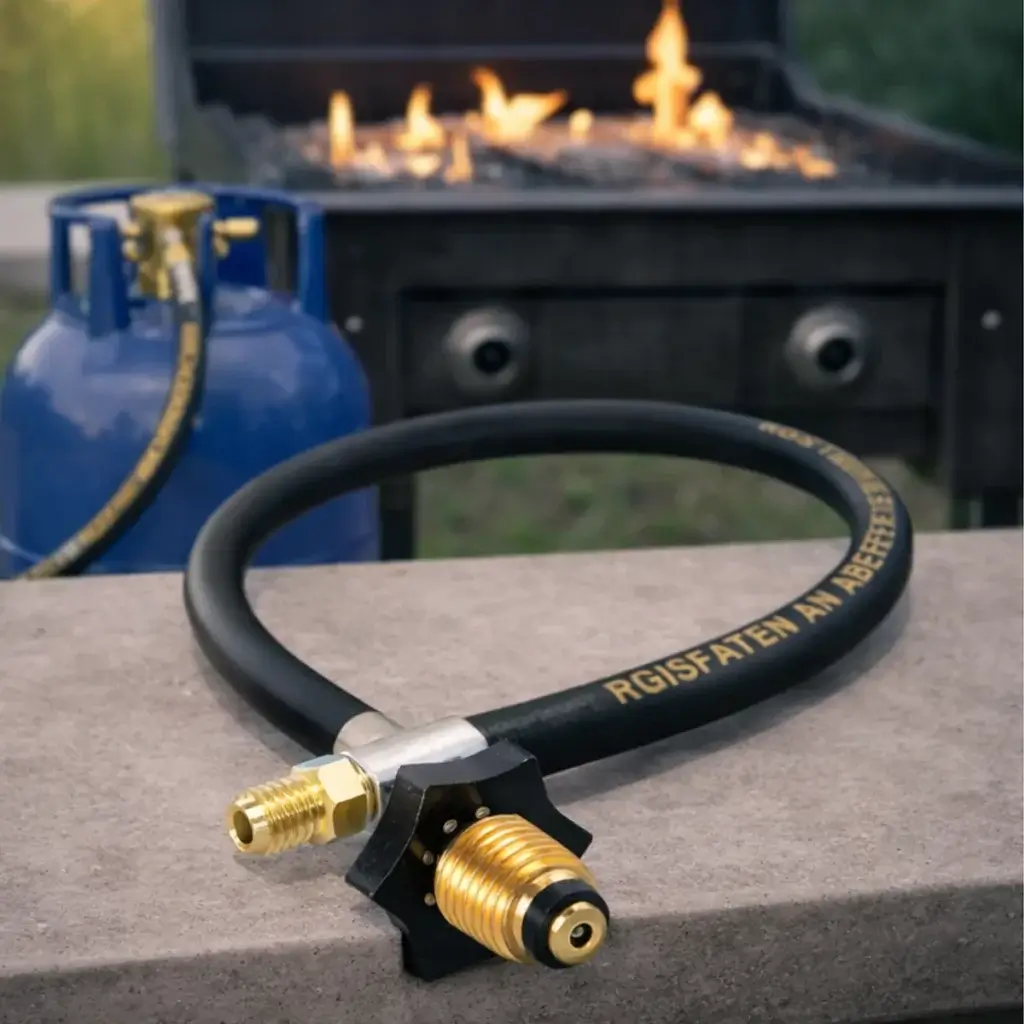
In practice, you’ll find this kind of pigtail hose in a wide range of installations. It’s suitable for domestic cylinder-fed systems supplying gas hobs, stoves, or small gas geysers, as well as for smaller commercial setups such as coffee shops, food trucks, and mobile catering units relying on bottled gas. It can also form part of temporary or backup gas supplies where cylinders feed into an existing system.
In each of these settings, the hose is doing the same job: safely connecting the high-pressure bottled supply to the first stage of your system. Because it sits right at the source, any issue here affects everything downstream. That’s why getting this one component right removes a disproportionate amount of risk.
Export-Friendly for Installers Beyond South Africa
If you or your clients are working in neighbouring countries, this product still fits comfortably into your toolkit. The hose is priced with South African VAT included for local sales, but when it’s exported, it is supplied at 0% export VAT. This works well for installers in nearby markets who are already sourcing gas components from South Africa and want a dependable, repeatable solution for their bottle connections.
Good Practice to Support a Good Product
Even a well-designed connector hose benefits from solid installation habits. It’s always worth taking a moment to inspect threads and sealing faces before you fit the hose, to route it so it isn’t kinked or forced around sharp corners, and to keep it away from excessive heat or abrasion. Once everything is assembled, a proper leak test with an approved leak detection fluid, rather than a lighter or match, should be standard practice. Hoses showing signs of cracking, swelling, or general damage should be replaced, not “stretched” for a few more months.
When you combine that kind of discipline on site with a hose that’s genuinely fit for purpose, you dramatically lower the odds of hearing from that customer again for the wrong reasons.
Why G1 Tradepoint Is a Solid Partner for Gas Pipes and Accessories
G1 Tradepoint focuses on giving plumbers and gas installers components that are not just compliant, but practical and installer-friendly. The Propane Pigtail Hose Pipe LPG Propane Bottle Connector fits that mindset: LPG-resistant black rubber, gas-specific and NTP threads, sensible length options, and pricing that matches day-to-day trade work rather than one-off, speciality projects.
If your goal is fewer surprises after handover and fewer trips back to fix small but serious problems, starting with the right LPG propane bottle connector hose is an easy decision. It’s a small part of the system, but a big part of your reputation.